
Vet Advantage
Pet Travel Basics: Ready to Roam?
August 20, 2020


Who We Are
Veterinarian-led commercial strategy for animal health, with over 16 years inside the animal health pharmaceutical industry.

Our Approach
Our capabilities work as one system. The positioning that convinces an investor is the same positioning that convinces a specialist, and it has to hold up in both rooms.
All capabilities
Vet Advantage · August 20, 2020
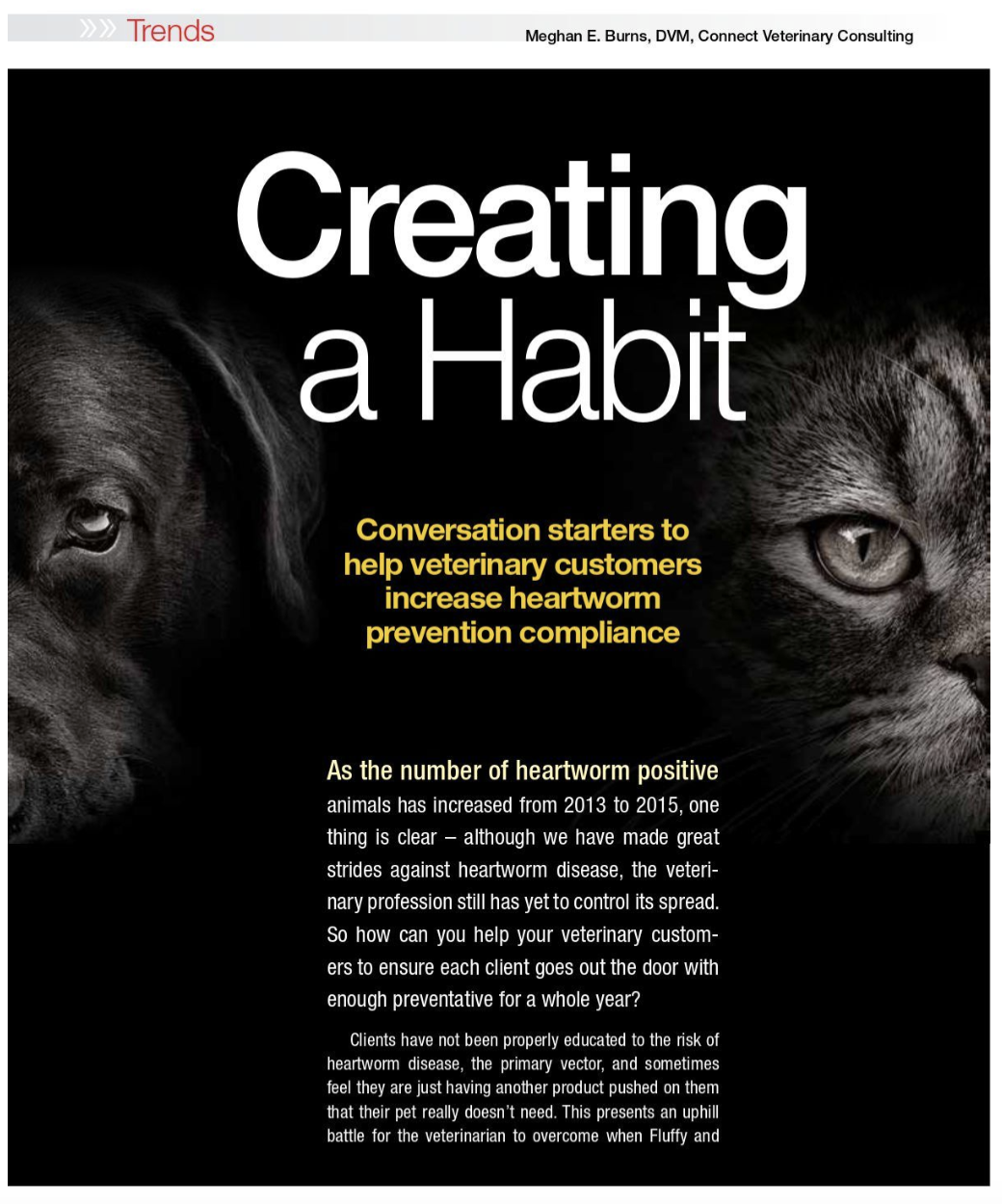
Learn more about conversation starters to help veterinary customers increase heartworm prevention compliance.
As the number of heartworm positive animals has increased from 2013 to 2015, one thing is clear – although we have made great strides in heartworm prevention, the veterinary profession still has yet to control its spread.
So how can you help your veterinary customers ensure each client goes out the door with enough preventative for a whole year?
Clients have not been properly educated to the risk of heartworm disease, and sometimes feel they are just having another product pushed on them that their pet really doesn’t need. This presents an uphill battle for the veterinarian to overcome when Fluffy and Fido visit for their yearly check-up and vaccine appointment. You as a sales representative can remind the veterinarian on how to start the conversation:
“Heartworms are a real danger and are a serious threat to both dog and cat health. This can be revealed by reviewing the lifecycle with the pet owner,” and then explain:
Let’s Connect
Tell us the company, the stage, what you are trying to accomplish and your timeline. Four fields, and Dr. Burns replies personally within a day.